
Albus Dumbledore
Arc
Dumbledore moves from a position of absolute secrecy to a moment of vulnerability where he must admit his manipulations and the emotional difficulty of his tactical choices.
Background
Dumbledore has spent years constructing a large-scale plan involving Harry Potter, viewing his tactical decisions as a necessity for the future.
Motivations
Dumbledore is driven by a larger, carefully constructed plan that he deems a necessity for the wizarding world, even when it requires manipulating those he cares about.
Personality
The literary version is a complex strategist who balances genuine care for others with a cold, tactical necessity. The cinematic version is characterized by a softer, more approachable warmth.
Erased Flaws
- •Calculating manipulation of Harry Potter
- •Deliberate withholding of critical information
- •Treating individuals as tactical pieces in a larger plan
Moral Complexity
Dumbledore faces significant ethical tension between his affection for Harry and his willingness to treat him as a 'piece on the board' to achieve a greater goal. He admits to withholding truth out of fear of Harry's reaction.
Literary Portrayal
In the source text, Dumbledore is a calculating strategist who deliberately keeps Harry Potter in the dark for years as part of a larger, carefully constructed plan. His actions are driven by perceived necessity rather than simple kindness.
Narrative Function
He serves as the architect of the overarching strategy against the narrative's threats, acting as both a mentor and a secretive manipulator of the protagonist.
Cinematic Adaptation
The film version portrays him as a gentle, warm, and grandfatherly wizard. His penchant for secrecy is barely present and is never truly confronted by other characters.
Emotional Volatility
He experiences internal conflict and fear regarding Harry's potential reactions to the truth, finding it difficult to remain detached due to his emotional attachment.
Meta Textual Critique
The adaptation process removed the moral weight of Dumbledore's choices, simplifying a complex, morally grey strategist into a more traditional, less challenging mentor figure.
Cross Media Discrepancies
- •In the book, Harry directly confronts Dumbledore's manipulation in Order of the Phoenix, whereas the film avoids this confrontation.
- •The book version admits to withholding the truth out of fear, while the film minimizes his secrecy.
Timeline
Strategic Secrecy
Dumbledore deliberately keeps Harry in the dark for years as part of a larger plan.
Confrontation in Order of the Phoenix
Harry confronts Dumbledore about his manipulation, leading Dumbledore to admit he withheld the truth out of fear and affection.
Explore more
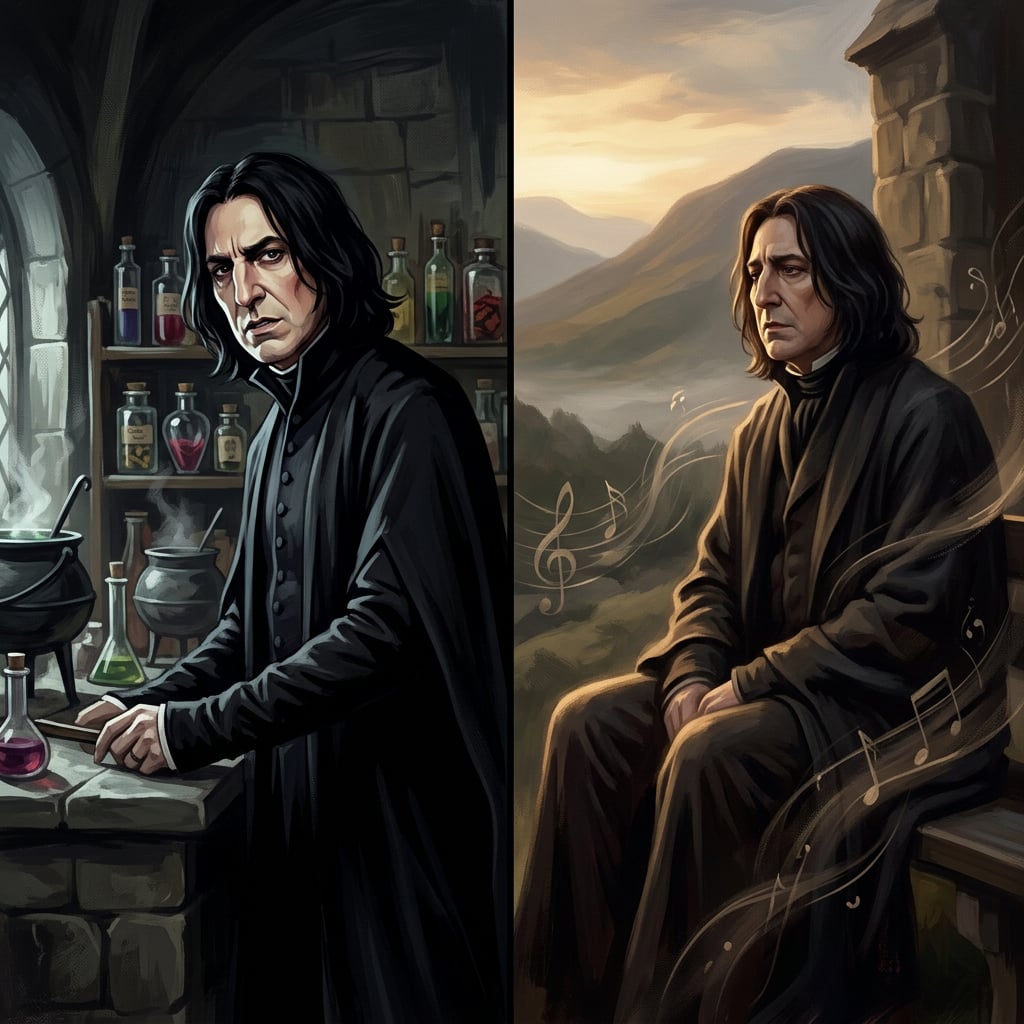
Snape's Overt Cruelty
A comparative analysis of Severus Snape's behavior, contrasting his explicit, petty cruelty in the books with his softened, tragic portrayal in the films.
Plot & Structure

Harry's Volatile Rage
The progression of Harry's internal emotional state from a central, uncomfortable volatility in the source material to a restrained and even-keeled demeanor in the adaptation.
Plot & Structure